
An update on our work with Bisan, our Palestinian partner
Despite closures, water scarcity, and repeated attacks on farms, the project succeeded in creating real change on the ground. The commitment to agroecology proved essential in strengthening food security and community resilience. With our support our partner Bisan has directly empowered more than 100 families to produce safe and sustainable food.

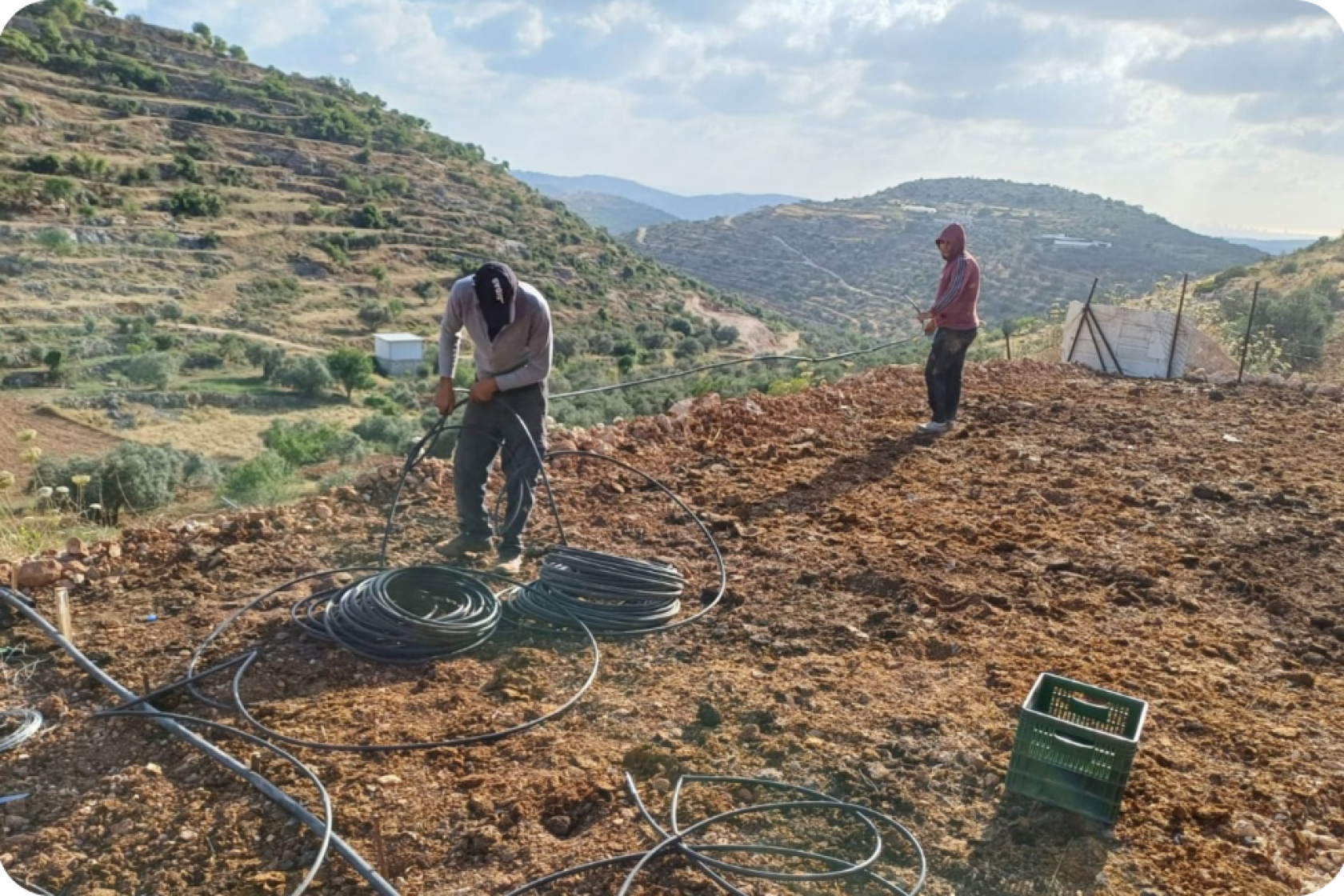
Bisan’s work involves both professional farmers and individuals seeking to improve their home gardens through agroecological techniques. These gardens serve not only household consumption needs but also provide an important source of income, particularly under the current difficult economic conditions. Many of the women supported in the project have become the primary breadwinners for their families following the loss of employment experienced by their husbands after October 7th. As a result, these home gardens have played a crucial role in sustaining their livelihoods.
Empowering women to apply agroecological techniques and revitalize these underutilized spaces is essential in addressing the food sovereignty challenges we are currently facing
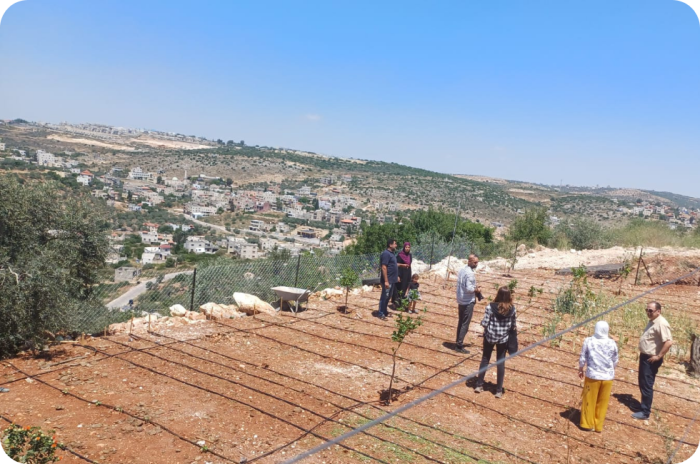
Through agroecological training and support, Bisan helped these women transform neglected backyards into productive and resilient spaces that contribute to both household consumption and income generation. Bisan connected them with professional farmers who assessed their gardens and remain available to provide ongoing guidance and technical support. Empowering women to apply agroecological techniques and revitalize these underutilized spaces is essential in addressing the food sovereignty challenges we are currently facing.
Highlights
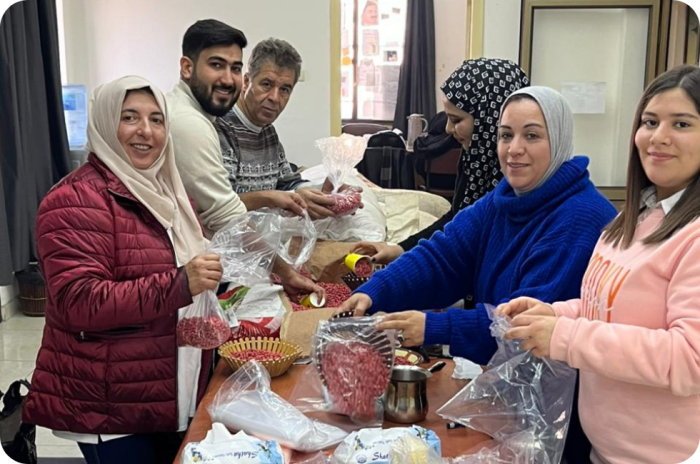
The main highlight of the year was the establishment of three model agroecological farms in Far’kha (Salfit Governorate), Madama (Nablus Governorate), and Kafr Ni’ma (Ramallah and Al-Bireh Governorate), which became training hubs for 113 participants. The sessions focused on soil health, water management, crop diversification, natural pest control, compost production and pruning.
Two key initiatives were launched: an agroecological banana demonstration plot in Jericho and the rehabilitation of the environmental farm in Al-Mughayyir (Ramallah and Al-Bireh Governorate). These achievements contributed to food security and agroecological awareness at community level. They for example offer alternatives for pesticides, which are used too much throughout Palestine because of lack of regulation.
Our project helped support farmers in remaining steadfast on their land despite persistent pressures to push them away, while also advancing our long-term objective of achieving food sovereignty
Bisan shares that it is most proud of encouraging people to return to their land and reconnect with agriculture despite the immense pressures they face. In a context of land confiscation, repeated incursions, and the burning of trees and crops, farmers chose to remain present and cultivate their land. Aseel Tork from Bisan: “Our project with Solidagro helped support farmers in remaining steadfast on their land despite persistent pressures to push them away, while also advancing our long-term objective of achieving food sovereignty.”
The occupation’s toll on farming
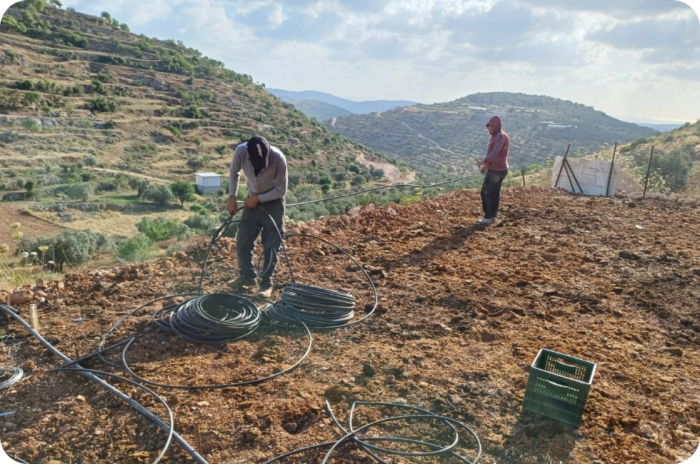
The occupation by Israel is a major challenge for agriculture. Apart from movement restrictions, harassment and water scarcity, settlers and the army destructed home gardens and agricultural facilities. Continuous incursions in areas like Al-Mughayyir caused destruction of crops and infrastructure. Al-Junaidi Nursery, that supplied agricultural materials, was burned, which affected farmers and delayed support. Also, one of the farmers that we supported with agroecological training had her garden completely demolished.
Continuous (Israeli) incursions in areas like Al-Mughayyir caused destruction of crops and infrastructure
These violations created logistical and psychological pressure but did not stop implementation. Instead, they reinforced the importance of strengthening farmers’ resilience and presence on their land.
The Palestinian agroecological movement
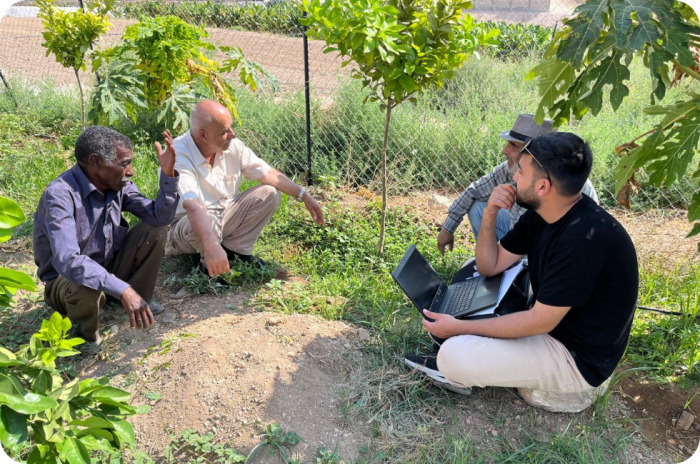
We still need to build a strong grassroots base for agroecology, and this is a key focus of our current work. Efforts are ongoing to expand community engagement and increase the number of farmers interested in agroecological practices. At the institutional level, we do meetings and field visits to strengthen cooperation among different actors. This gradual process aims to widen participation and lay the foundation for a broader agroecological movement.
Looking forward
In 2026, the project’s results are expected to become clearer and more measurable, as many of the planted crops will be fully productive, allowing us to assess quantities and tangible outputs. The impact on food security and household income will therefore be more visible. Farmers will also have more time to further develop their skills and invest greater care in their farms. At the same time, it will be important to support new beneficiaries and additional home gardens in order to expand agroecological practices into new areas and communities.