
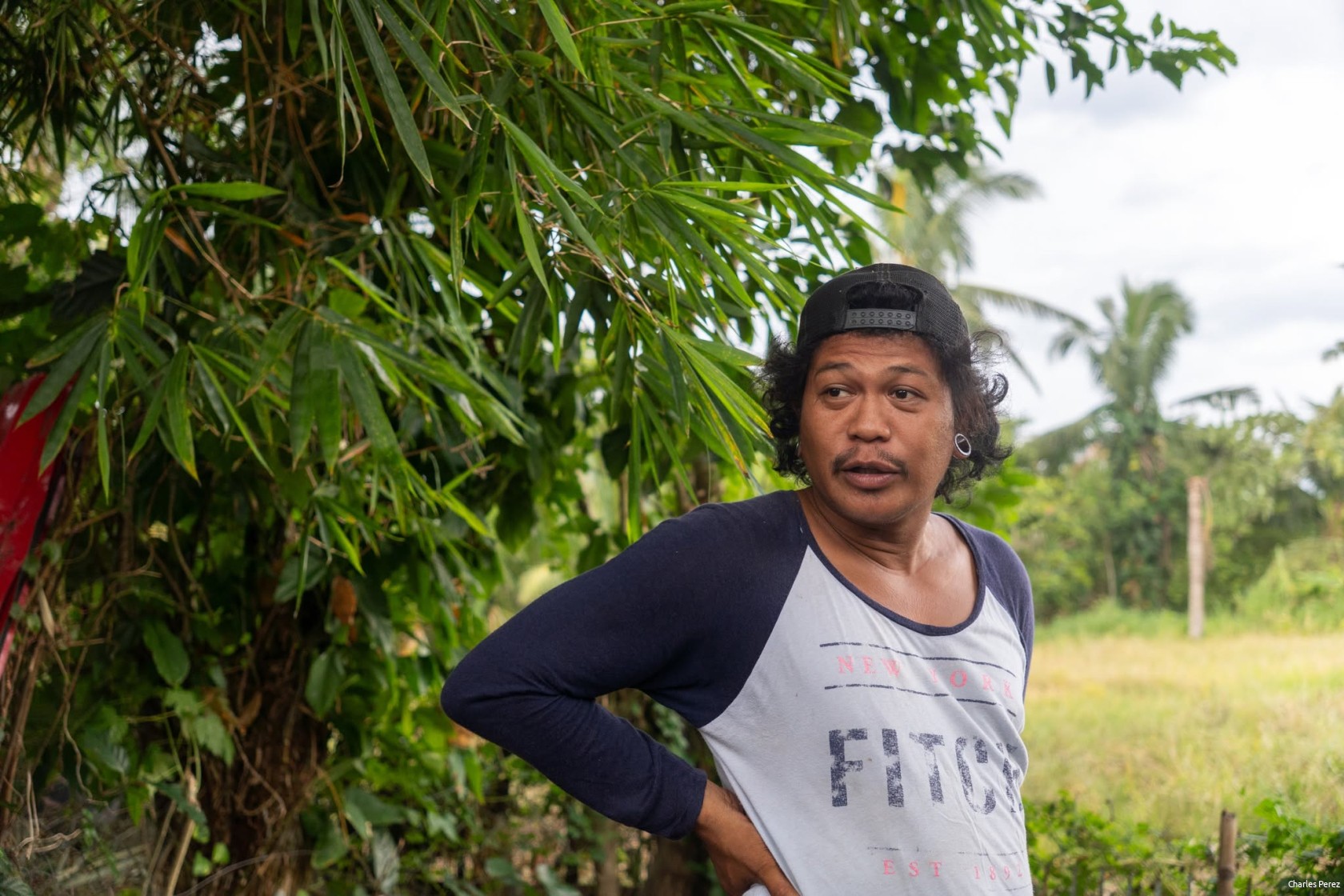
Filipino farmer Julius Borjal: “Farmers are willing to work differently, but don't get enough support.”
Julius Borjal is a former student of the Bicol Farmers School, supported by Solidagro. He has seen firsthand how the use of chemical fertilizers and pesticides affects agriculture in the Bicol region of the Philippines. According to him, some chemical fertilizers can acidify the soil. Pesticides, in turn, can kill beneficial soil organisms. It is precisely those organisms that keep the soil healthy and help crops grow.

Julius also remembers the cassava his parents used to buy at the market. He thought it had a salty taste and believes this was due to the use of chemical fertilizers. He is also concerned about glyphosate, a widely used herbicide. Farmers who work with it frequently may face health risks, especially if they cannot protect themselves properly. There are also studies suggesting that glyphosate can affect the bacteria in our guts. Scientists are still investigating exactly what the consequences of this are.
According to Julius, farmers who want to switch to organic or agroecological farming still receive too little support. Many government programs continue to rely on chemical fertilizers and pesticides. As a result, many small farmers remain dependent on expensive products and sometimes end up in debt.
The unequal distribution of farmland also makes things difficult. Farmers with little land often feel pressure to produce as much as possible. As a result, they are more likely to resort to synthetic fertilizers and pesticides. Still, Julius believes that agroecological farming is the best way forward. It helps keep the soil healthy and makes farmers more resilient to the effects of the climate crisis.
According to Julius, farmers need more support to make that transition. Access to farmland, a government that supports sustainable agriculture, and respect for nature are indispensable in this regard.
Text adapted from our partner CCNCI