
Looking back: a turbulent yet resilient 2025 in the Philippines
Filipino farmers have been under severe pressure this year. The climate is becoming increasingly harsh: typhoons and floods are washing away harvests and threatening the income of entire families. At the same time, farmers who stand up for their rights are being intimidated and silenced. Violations of farmers' rights make agroecology almost impossible: without land security, without access to their own seeds and without the right to organise, farmers cannot build sustainable agriculture.

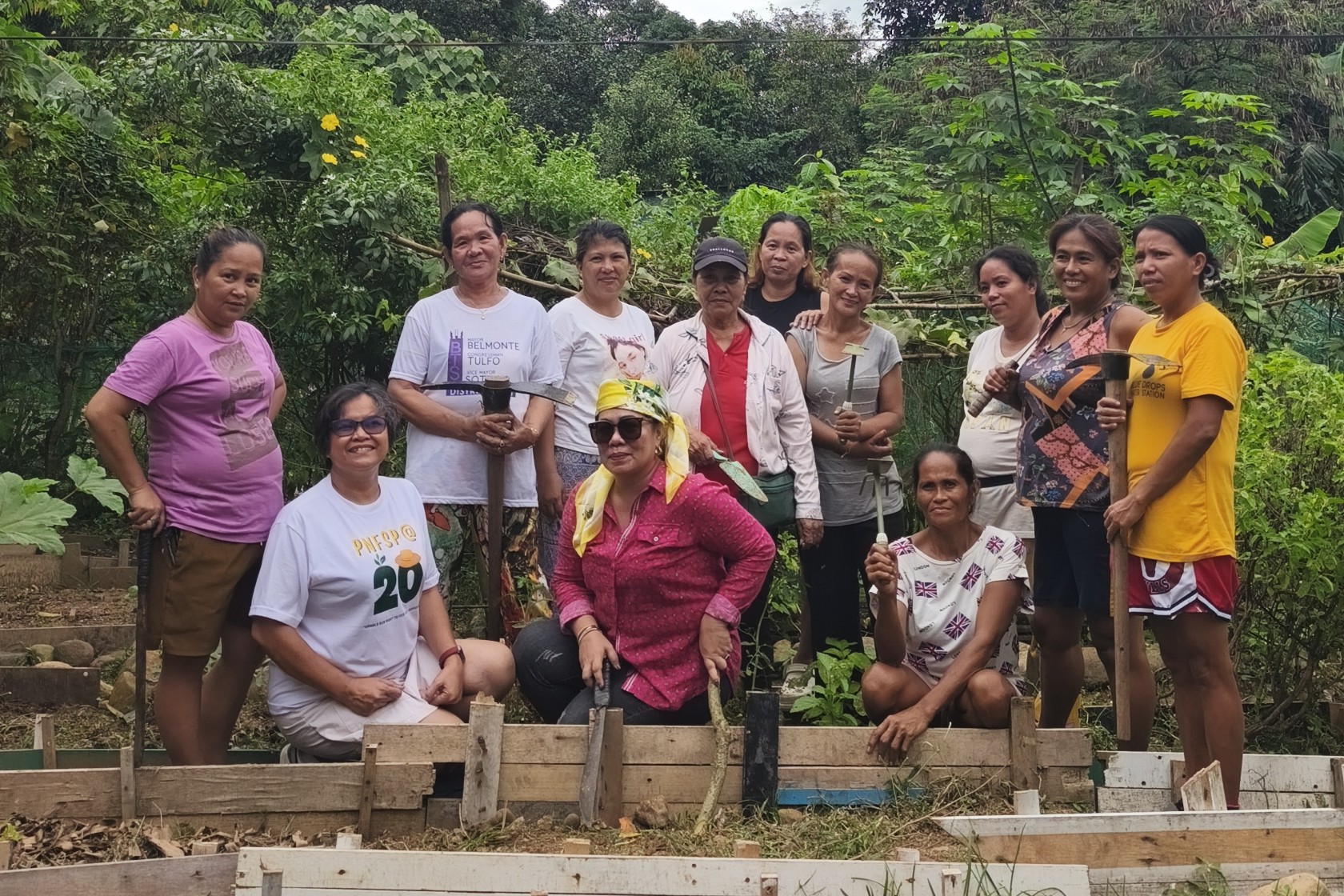
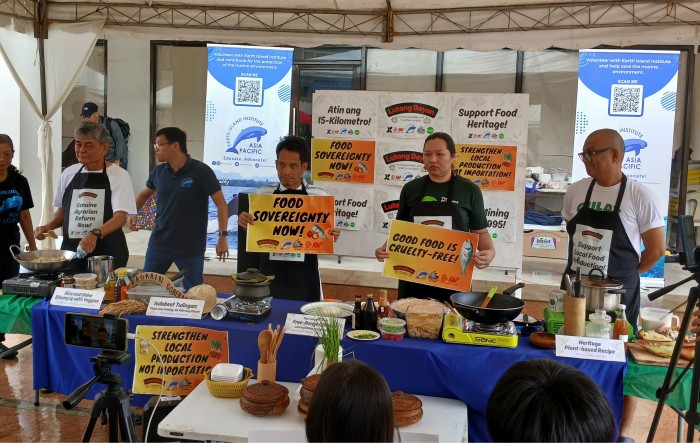
Our partners are not letting themselves be deterred, especially as the need for agroecology becomes increasingly clear. Agroecology X organised six events where farmers and a total of no fewer than 278 organisations came together to showcase local, organic products and innovations developed by farmers. The fairs are not only a place to share knowledge, but also to highlight the importance of farmers' rights and strong local food systems.
At the policy level, partner PNFSP (Philippine Network of Food Security Programmes) began working with the Commission on Human Rights to defend food security. They launched a platform where civil society organisations and human rights experts share insights and develop strategies to tackle the growing problems of hunger and inequality. In 2025, 20.1% of Filipino citizens were suffering from hunger.1
Virginia Nazareno, MASIPAG-farmer:
As a grandmother, I am happy to pass on my knowledge and practices as a MASIPAG farmer to my children and grandchildren. I believe it is important for farmers to do this. However, we continue to fight for our land and our livelihoods. We continue to oppose GMOs because we understand the negative consequences they can have on our livelihoods, our health and the environment.
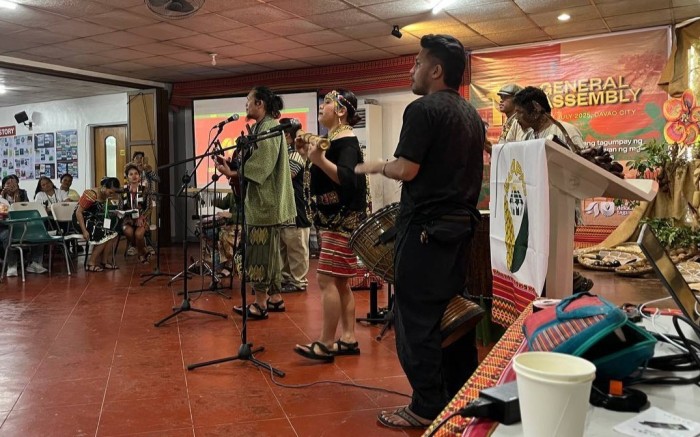
We also celebrated the 40th anniversary of our partner MASIPAG, one of the most important farmers' movements in the country. MASIPAG elected a new board of directors and approved its future plan. In doing so, the movement confirmed its commitment to agriculture that is not controlled by large companies, but by farmers themselves, with respect for their rights to seeds, the environment and a fair income.
We are particularly proud of the publication of the report Barriers and Pathways with Ibon Foundation and the four Philippine partners. This study, supported by the Flemish International Climate Action Programme, identifies the obstacles that are currently holding back agroecology and the opportunities for deploying this sustainable approach on a larger scale in response to the climate crisis.
It was difficult to choose a few highlights, but we conclude the list with what the members of the Poswoy community in Balbalan, Kalinga have achieved. With the support of partner CDPC (Centre for Development Programmes in the Cordillera), they have completed the construction of their water tank. The first phase of the water system project has now been completed. The initiative, which is being implemented through innabuyog (mutual cooperation), aims to improve access to domestic water.
Climate and repression put pressure on farmers
Severe typhoons and floods have devastated farms and damaged crops, livestock and infrastructure throughout the Philippines, including in regions where our partners are active, such as Bicol and the Visayas. The consequences are being felt in the market: food prices are rising and more and more families are facing hunger (see above). This makes the need for climate-resilient, farmer-led solutions such as agroecology more urgent than ever.
At the same time, civil society is under severe pressure. At least 73 human rights defenders, development workers and farmers have been prosecuted under the anti-terrorism law, and the accounts of 17 NGOs have been frozen. This makes it increasingly difficult for organisations to continue supporting vulnerable communities.
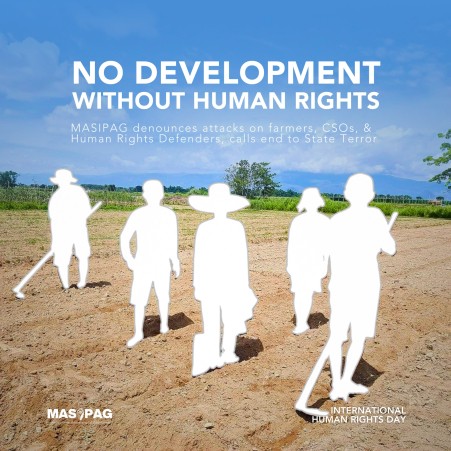
This repression is also palpable in the working area of our partner MASIPAG. In Albay province, employees of MASIPAGs member organisation TABI were publicly labelled “communists” on posters, just as they were providing emergency aid to communities severely affected by successive typhoons. This illustrates how even humanitarian efforts come under pressure in a climate of intimidation.
Looking ahead
In 2026, we will organise more fairs in schools, churches and community centres through Agroecology X. To this end, we are counting on more intensive cooperation with local authorities.
Together with our partners, we will continue to invest in research, such as the report Barriers and Pathways, because agroecology must be continuously evaluated and is not only a movement but also a fully-fledged science.
From 2027, we will join the new Food Systems Alliance consortium. To this end, we will collaborate more closely with Sumpay Mindanao and Entraide et Fraternité. The four local partners will remain the same as in the current programme: CCNCI, MASIPAG, CDPC and PNFSP. We are now busy preparing the new programme.
1. This percentage is the average calculated per quarter from January to September; figures for the last quarter are not yet available. It refers to suffering from hunger and having nothing to eat at least once every three months. Source: Social Weather Stations: https://www.sws.org.ph/swsmain/artcldisppage/?artcsyscode=ART-20251105160840. Read more.