
Reflection: What mushrooms teach us about agroecology
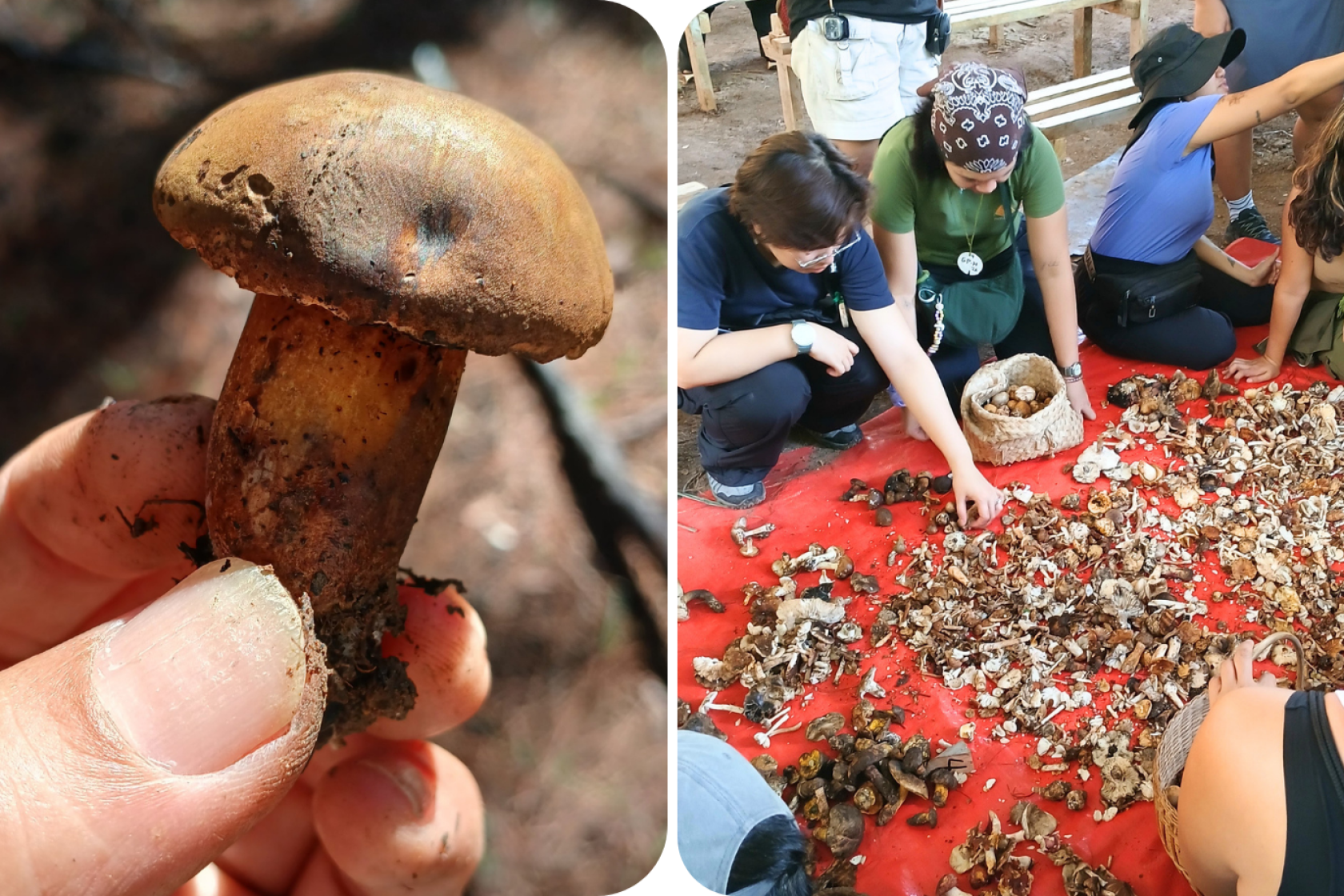
SOLIDAGRO partner Center for Development Programs in the Cordillera once again hosted Gulay Pa More (More Vegetables) at Kumbasa Noodle House in Sagada, Mountain Province last June. The gathering brought together camping, cultural exchange, agroecology discussions, community cooking, coffee trail hikes, farm immersions, and guided mushroom foraging, all rooted in sustainable living and Indigenous knowledge. This article is a reflection inspired by a guided mushroom-foraging experience.

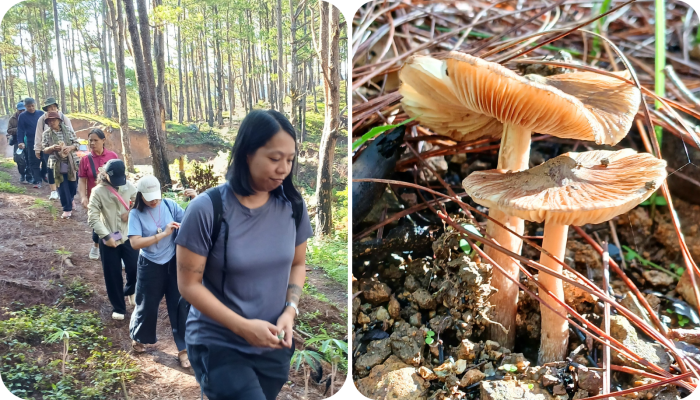
You step into the forest, breathing in the earthy smell of fallen leaves as sunlight slips through the pine trees. The forest floor seems empty, covered only by an endless blanket of dry, fallen pine needles.
You walk on, moving quickly, eager to find your first mushroom. Then you realize it won’t be that simple.
You soon find out that mushroom foraging isn't about rushing through the forest. It's about walking slowly, observing, and letting the forest show you where to look.
You scan the forest floor, you look beneath the vegetation, among a blanket of dried pine needles, around the trees, and on rotten logs.
As you go on, you start to recognize the subtle signs that the forest conveys: an unmistakable bulge underneath the needles, a tiny cap peeking through the ground.
And you pick your first mushroom. Finding the first mushroom is the hardest part, the local mushroom foraging guides say. Once a mushroom appears, you don’t have to wander farther.
Take your time. Bend down, look closely, and let your eyes wander across the forest floor. More often than not, other mushrooms are hidden close by. The forest provides the right conditions for mushrooms to grow and thrive together, and the mushrooms return the favor by nourishing the forest through their underground network.
Which brings me to the main idea of this reflection: mushrooms have much to teach us about agroecology.
We all know that mushrooms are fungi, but there's much more to fungi than the mushrooms we see. The mushroom is only the fruiting body. The real organism is the mycelium - a vast underground network of fungal threads that binds the soil together, connects trees like a natural internet, and recycles nutrients to keep the forest alive.
Agroecology has its own mycelium. It grows through the relationships among farmers, the land, Indigenous knowledge, seed exchanges, local markets, and communities
Agroecology has its own mycelium. It grows through the relationships among farmers, the land, Indigenous knowledge, seed exchanges, local markets, and communities. Like mycelium, these connections are mostly unseen, yet they hold everything together.
That's why agroecology is about more than producing food. It's about building relationships, sharing knowledge, and working together to create resilient and sustainable food systems.
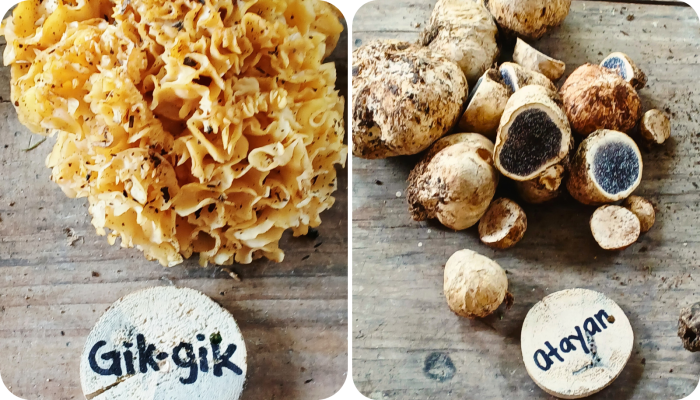
As your basket slowly fills, you begin to notice just how diverse mushrooms are. They come in all kinds of shapes, sizes, colors, and textures.
Then it hits you: the forest thrives because of this diversity. It wouldn't be the same if there were only one kind of mushroom. Every kind of mushroom has its own role to play in keeping the forest healthy.
Agroecology works the same way. Instead of relying on a single crop, agroecology embraces diversity by bringing together different plants, trees, animals, insects, and soil organisms. This diversity makes farms healthier and more resilient to pests, diseases, and a changing climate.
Just as many kinds of mushrooms help sustain the forest, different people and ways of knowing help build a stronger food system
But diversity goes beyond the farm. It also values the knowledge and experiences of farmers, Indigenous Peoples, women, youth, and local communities. Just as many kinds of mushrooms help sustain the forest, different people and ways of knowing help build a stronger food system.
Once your basket is full, you still can't rush and cook your mushrooms. First, you need someone who knows the forest well, someone who can tell the edible mushrooms from the poisonous ones.
That's where local mushroom guides come in. A respected mushroom guide likes to joke, "There are only three places you can end up: the hospital, heaven, or a good trip." It's funny, but the message is serious. If you don't know what you're picking, the consequences can be dangerous.
The forest rewards curiosity, but only when it's guided by knowledge
Agroecology teaches the same lesson. There are no shortcuts or one-size-fits-all solutions. Sustainable farming starts with the knowledge of farmers, Indigenous Peoples, and local communities who have spent generations learning the land, understanding its rhythms, and working with nature instead of against it.
In agroecology, local knowledge isn't just respected; it's essential. The people who know the land best often have the most to teach us about caring for it.
The best thing about mushroom foraging isn't just the mushrooms. It is that you start seeing the forest differently (and no, I didn't eat a psychedelic mushroom!). You're no longer just looking for mushrooms; you start reading and learning from the forest.
Agroecology does the same thing. It teaches you to see a farm not just as a field of crops, but as a living system built on relationships, local knowledge, and collective action.